Graded news bulletins
NewsMeasured newsreader pace · current-affairs vocabulary that repeats
 Mandarin
Mandarin listening, one line at a time
Train on unscripted Mandarin audio, transcribe it line by line. Let the difference between what you wrote and what was said become the lesson.
No card required · Learn in English, practise in Mandarin
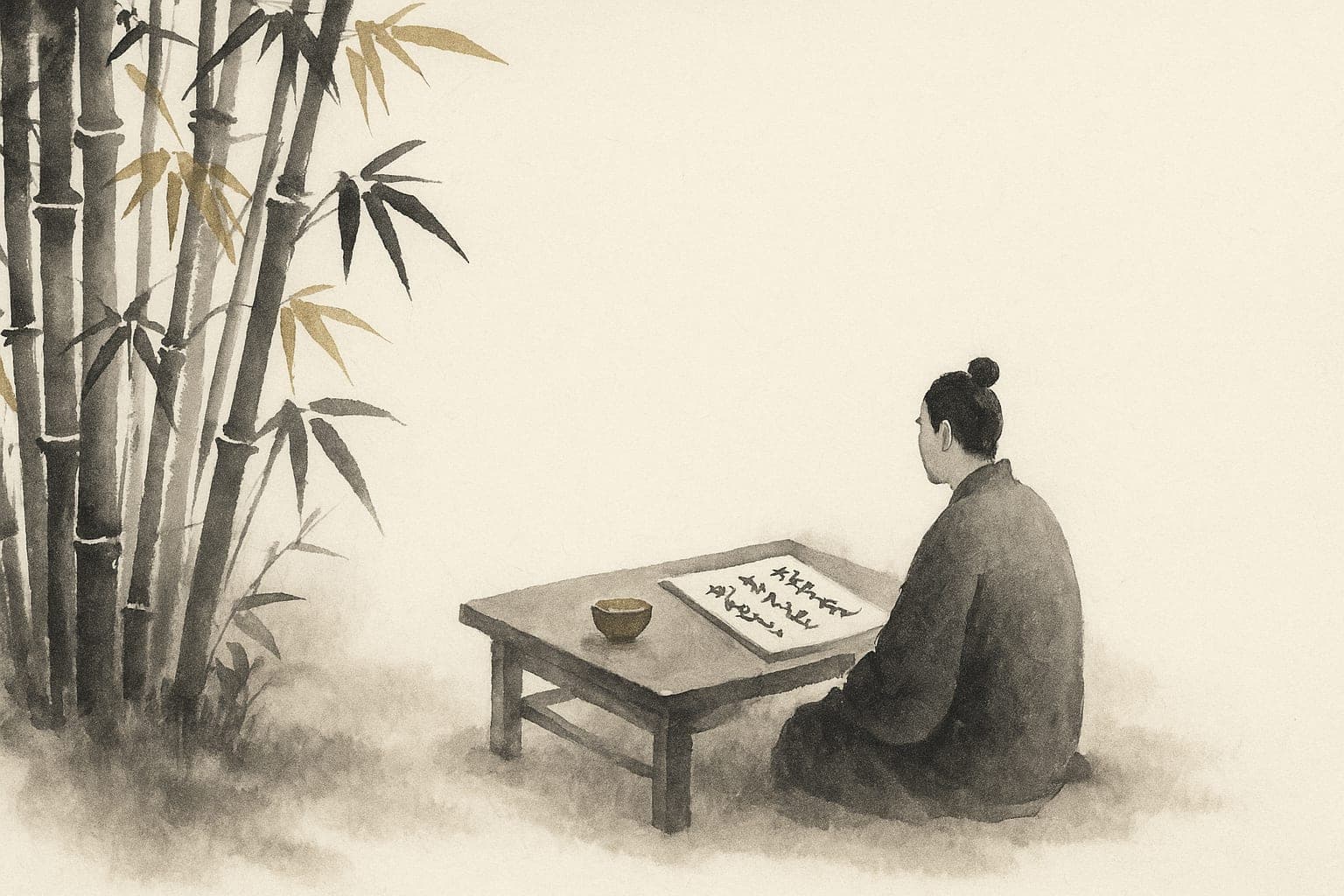
What the ear receives
你好 ní hǎo
Written nǐ hǎo — the first third tone lifts.
Shui-mo
Ink, paper, and the space between them. Most of a page is silence — most of listening is too.
Across WELE, all languages · this month
500+
listening hours
3,000+
listening sessions
1,000+
active learners
5,000+
submissions
The listening gap
It is rarely a vocabulary problem. Your ear has not yet learned what the written language does to itself once it becomes sound.
01
Four words can share the same syllable and differ only in the shape of the pitch. Your ear spent a lifetime treating that shape as emotion, not meaning.
02
A written character tells you what it means long before it tells you how it sounds. Reading fluently and hearing fluently are two separate skills in Mandarin.
03
There are no spaces on the page and fewer in the air. Syllables merge, finals curl away, and tones bend when they collide with each other.
Inside a lesson
Dictation is the smallest honest test of listening. You commit to an answer before the transcript rescues you.
Replay a short passage as many times as you need, slow it down, and write without ever leaving the audio. Nothing on screen competes with the sound.
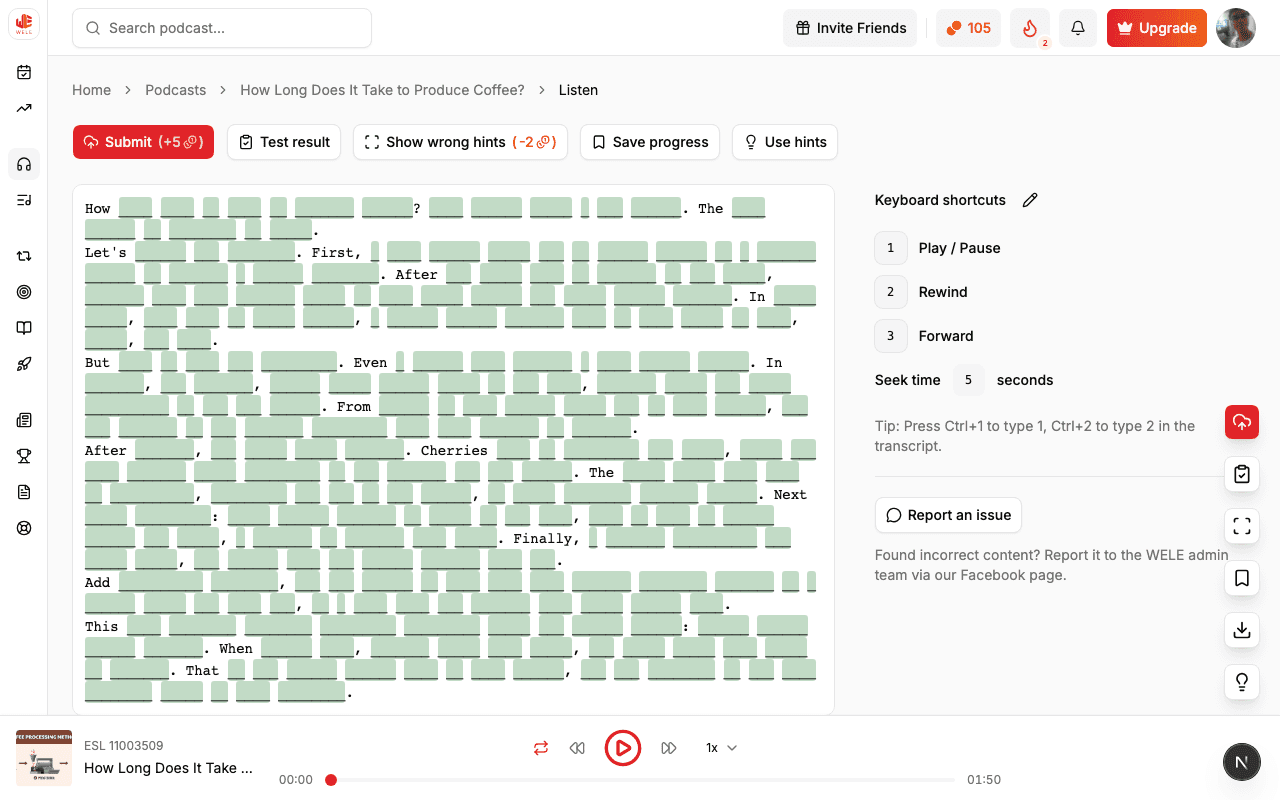
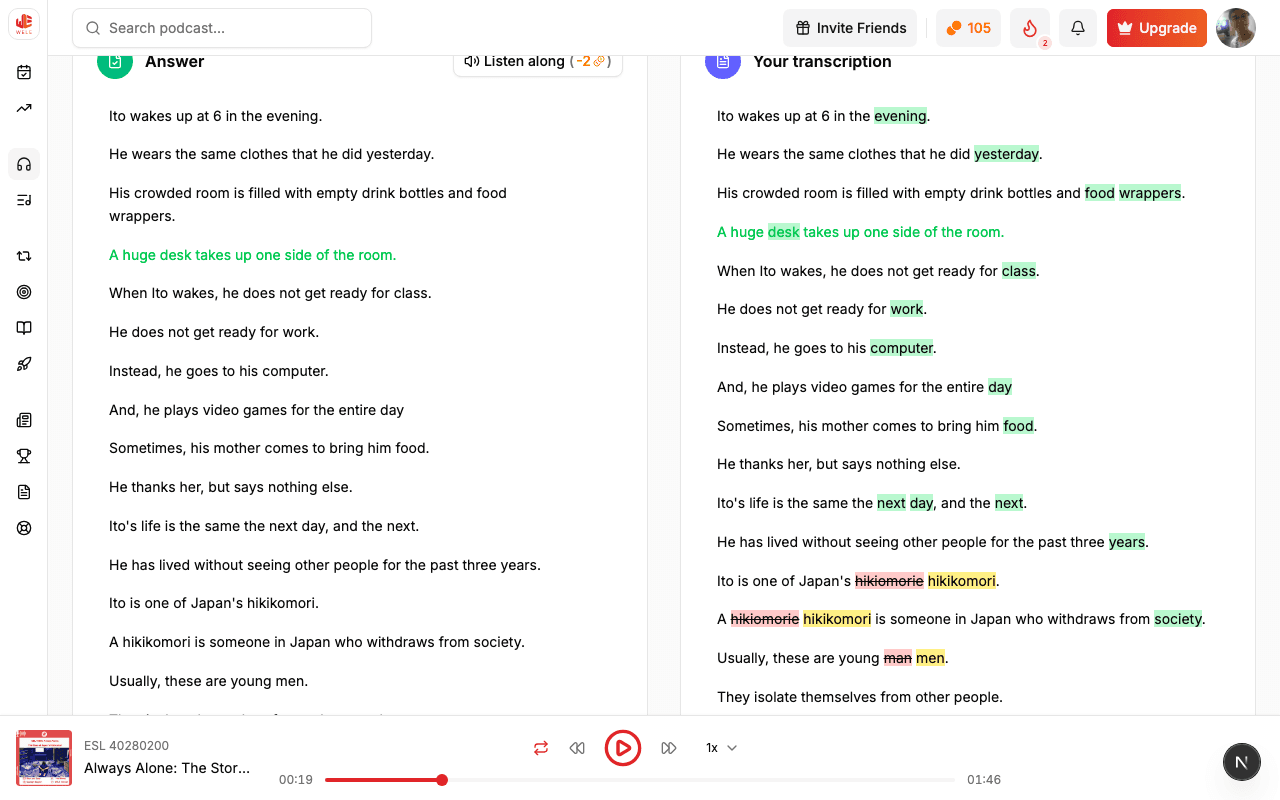
Reveal the transcript and see exactly which syllables you missed, which tone you chose, and where your line drifted from the speaker.
The WELE method
A prediction, a correction, and a return visit. Everything else on the page is deliberately left empty.
Take in the whole line before you chase any single syllable.
Commit to what your ear actually received, tones and all.
Reveal the transcript and read the difference carefully.
Meet the words you missed again, timed to your memory.
Anatomy of sound
A tone is not decoration on top of a syllable — it is part of the word. And tones move: they lift, flatten, and merge depending on what stands next to them.
ā
level
á
rising
ǎ
dipping
à
falling
Four shapes, and every one of them can bend. Dictation is where you finally hear which is which.
On the page / in your ear
你好
nǐ hǎo
ní hǎo
“hello”
Tone sandhi — two third tones collide, the first becomes a second tone
一个
yī gè
yí gè
“one (of something)”
The tone of 一 changes with the tone that follows it
哪儿
nǎ er
nǎr
“where”
Erhua — the final curls into the syllable and the two become one
The listening shelf
Move from clear, measured speech toward audio that was never slowed down for you.
Six kinds of Mandarin, ordered by how much they ask of your ear.
Measured newsreader pace · current-affairs vocabulary that repeats
Two voices, overlapping turns, real hesitation and repair
Colloquial phrasing · northern erhua next to southern finals
Structured argument · four-character expressions in context
Dense noun phrases · deliberate, unhurried delivery
Background noise, fast turns, nothing tidied up for learners
Built for deliberate practice
No noisy lesson map, no endless rewards loop. Tools to practise, notice, and come back.
A note from WELE
A language becomes yours the moment a voice stops sounding foreign.
WELE builds listening practice around real voices and feedback you can act on. The Mandarin experience has its own atmosphere — more paper than pixel — but the principle is unchanged: listen actively, understand your mistakes, and feel the ground move under you.
Simple pricing
The core experience is free. Premium adds depth without turning your learning into a subscription puzzle.
Learner notes
“Two years of class and I still froze the moment anyone spoke at normal speed. Writing it down was humbling, but it showed me I was not missing words — I was missing where they ended.”
Sam
Second-year Mandarin learner · Melbourne
“I could recite the four tones perfectly in isolation and still get them wrong in a sentence. Seeing the third tone shift on the page finally explained what my ear had been arguing with.”
Nadia
Preparing for HSK 4 · Berlin
“Fifteen minutes before work, one short passage. After a month, the podcast I used to treat as background noise had turned into something I could follow.”
Daniel
Works with suppliers in Shenzhen · Chicago
Before you begin
Wondering whether dictation suits your level, your input method, or the time you actually have? Start here.
Begin today
Begin with one short passage. The next time that sound goes past, it may not go past you.
Start learning free